Guide8 min read
What Is an EMP Attack and Why Should You Care?
An EMP could destroy every electronic device in your home in milliseconds. Here is what you need to know and how to protect yourself.
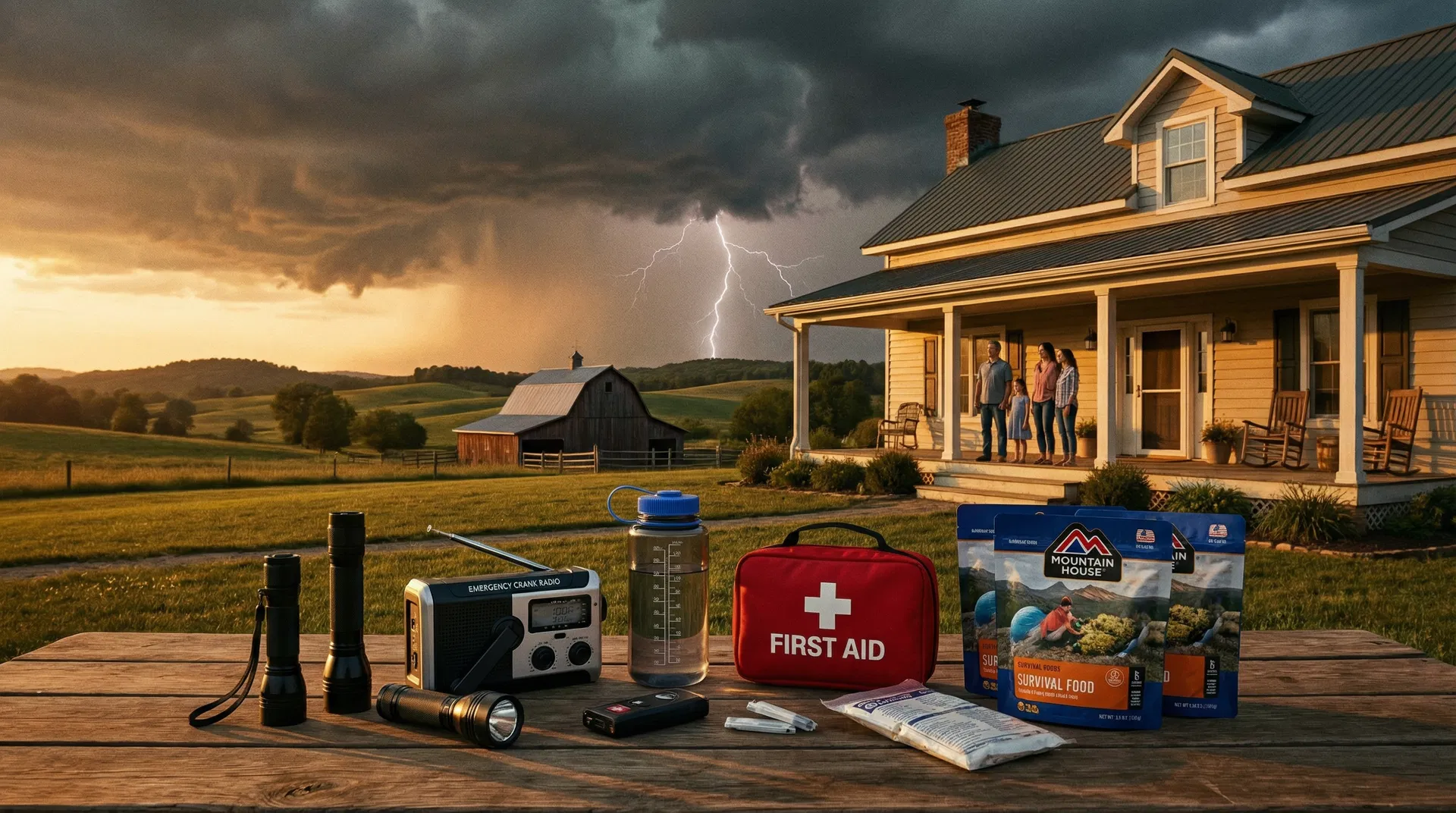
A 72-hour emergency kit — also called a "bug-out bag" or "go bag" — is the foundation of any emergency preparedness plan. It contains everything your family needs to survive for three days without access to stores, utilities, or emergency services. FEMA recommends every household have one, and for good reason: the first 72 hours after a disaster are when emergency services are most overwhelmed and least able to help.
Water is the most critical item. The standard recommendation is one gallon per person per day, so a 72-hour kit for a family of four requires 12 gallons. This is heavy and bulky for a portable kit, so a practical approach is to store water at home (in 5-gallon jugs or a WaterBOB bathtub liner) and include water purification tablets or a portable filter (like the LifeStraw or Sawyer Squeeze) in your portable kit. The Sawyer Squeeze can filter 100,000 gallons of water from any source and weighs only 3 ounces.
For a portable 72-hour kit, focus on calorie-dense, lightweight, no-cook or minimal-cook food. Good options include: emergency food bars (like Datrex or Mainstay), freeze-dried meals in individual pouches (Mountain House or 4Patriots), peanut butter, nuts, dried fruit, and granola bars. Aim for at least 2,000 calories per adult per day. Do not forget a manual can opener if you include canned food.
Include at minimum: a change of clothes for each person, sturdy walking shoes, rain ponchos, emergency mylar blankets (they weigh almost nothing and are remarkably effective), and a small tent or tarp if you have the space. If you live in a cold climate, add wool socks and a warm layer for each person.
A hand-crank or battery-powered AM/FM/NOAA weather radio is essential — it is your primary source of emergency information when cell networks are down. Include a physical map of your local area and region (do not rely on your phone for navigation in an emergency). A whistle is a simple but effective signaling device. Consider a backup battery or solar charger for your phone.
A well-stocked first aid kit is non-negotiable. Include: bandages, gauze, medical tape, antiseptic wipes, antibiotic ointment, pain relievers, antihistamines, and any prescription medications your family members take. Store at least a 7-day supply of prescription medications in your kit and rotate them regularly. Include copies of important documents (ID, insurance cards, emergency contacts) in a waterproof bag.
In a grid-down scenario, ATMs and card readers will not work. Keep $200–$500 in small bills in your kit. Include photocopies of passports, birth certificates, insurance policies, and a list of emergency contacts with phone numbers written down (not just stored in your phone).
An EMP could destroy every electronic device in your home in milliseconds. Here is what you need to know and how to protect yourself.
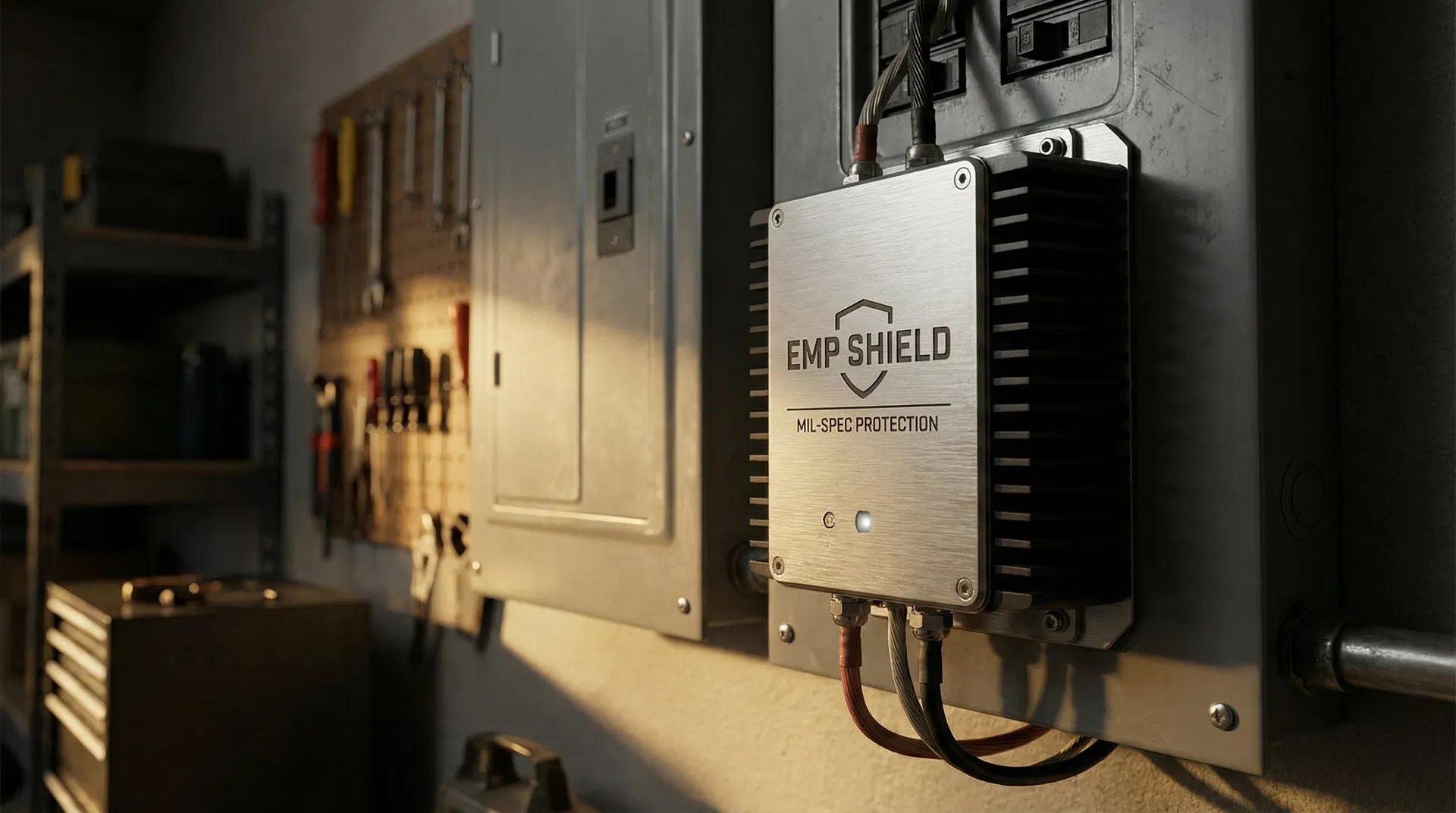
A practical, step-by-step guide to EMP-proofing your home — from whole-home protection devices to Faraday cages and backup power.
A complete hurricane preparedness checklist — supplies to stock, evacuation planning, and what to do when the storm hits.